外国書購読 Day5
Review of
Chapter 1 ~ 4.
2024-10-30
Review of Previous Chapters
Introduction
Today’s lecture is a review of the previous chapters 1 to 4. And we will try to use R to understand the basic concepts of the modern audit.
- first 90 minutes: Review of the previous chapters.
- second 90 minutes: Basic statistical analysis using R.
Aim of the lecture
Auditing \times
Data Science
- To understand the basic concepts of the modern audit.
- To understand the basic statistical analysis.
- To construct the basic statistical model for auditing.
Chap.1 Auditing
Definition of Auditing
- An audit (監査) 1 is an independent examination (独立的検査) of the records of an organization to ascertain how far the financial statements as well as non financial disclosures, present a true and fair view (「真実かつ公正な概観」) of the concern.
- It also provides assurance (保証) that the systems of record-keeping are well-controlled and accurate as required by law.
History of Auditing
Auditing initially existed primarily for governmental accounting (政府会計) and was concerned mostly with record-keeping (帳簿記入) rather than accounting procedures.
After the Industrial Revolution that auditing began evolving into a field of fraud detection (不正発見) and financial accountability.
Auditors developed a system for examining a representative sample (代表サンプル) of a company’s transactions allowing audits to be completed in less time and at lower costs.
As businesses have increased in complexity, such “risk-based” auditing has evolved to make auditing more efficient and economical.
the Birth of Audit Analytics
- Increased data availability, more powerful computing, and an emphasis on analytics-driven decision in business has created many jobs in data science.
- Much of employees analyze data with MS Excel or other spreadsheet.
- But MS Excel has serious limitations and conflates metadata with formulas and data; and all are called “cells” in Excel.
- Furthermore Excel is horrendously slow 1.
Programming Languages
- For those who have reached the limits of Excel, Next step is to learn R or Python used by data analysts and data scientists.
- For anyone interested in machine learning(機械学習), working with large datasets, or creating complex data visualizations, both have become standard tools for analysis.
- Python is better for data manipulation and repeated tasks,
while R is good for ad hoc analysis and exploring datasets 1.
Use R!
- R is good for statistics-heavy projects and one-time analyses of a dataset.
- R is also more difficult to learn, as many of its conventions assume you have a solid background in statistics.
- Python conceptually uses the same control structures and data types that you will find in other languages, which is why computer scientists prefer Python.
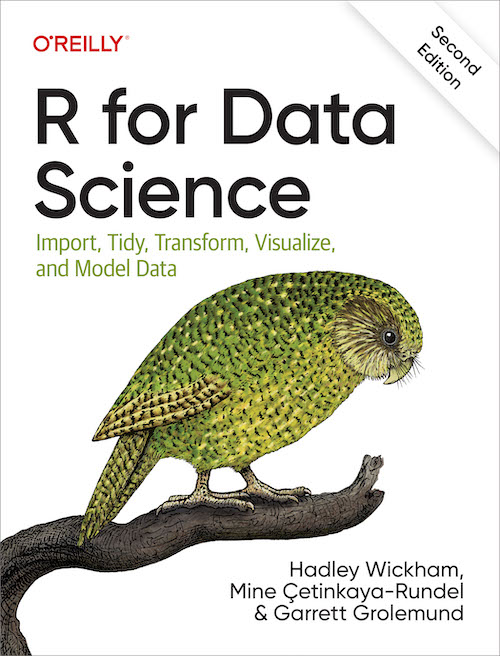
Reporting with R
- No matter how brilliant your analyses are, if you cannot communicate them, they are worthless.
- In support of this, R has the report writing tool called
knitr. knitris a powerful tool for dynamic data report generation so much so that it is a worthy addition to any programmer’s toolbox.- You can use
RmarkdownorQuartoto create a report withknitr.
R and Machine Learning
- R segues statistics with machine learning (ML), which is important since the concepts of ML and artificial intelligence derive from statistics.
- Much of the Python-based literature on ML completely misses underlying statistical concepts and consequently fails to be as effective as R in developing ML algorithms.
- It is written by computer scientists who understand well the Python scientific stack, and who will demonstrate the steps in rote manner of how to achieve a certain goal, but would not be able to impart much insight into what happens behind the scenes.
R and AI
- If you are planning to work in ML, R is a much more worthwhile investment than Python. (author’s biased opinion) 1
- I firmly believe that the extra effort in learning R will be rewarded tenfold if you intend to work in data analytics 2.
The Birth of Modern Auditing
- At the start of the 19c, 11 Londoners listed their occupation as the archaic Accontants (会計士).
- The Bankruptcy Act of 1831 formally recognized accountants by appointing them as “Official Assignees” responsible for preparing company accounts. This laid the groundwork for transparency in financial reporting.
- Bankrupt firms were especially likely to use their services, which increasingly served an audit function.
Audit firms
- The British Companies Act of 1844 established the incorporation of business by a formal registration process.
- It required annual appointment of auditors to examine the accounts and balance sheet of all public companies.
- The Companies Act of 1862 required banks to be audited and established the practice of limited cash dividends to be paid only out of profits.
- By 1900, the audit was the central practice of accountants.
The Big 4
- The earliest of the Big Six accounting firms were started in mid-nineteenth century London.
- William Deloitte opened a London firm in 1845.
- Samuel Price and Edwin Waterhouse formed their partnership in 1849. William Cooper started his firm in 1854, to be joined by his brothers in 1861.
- William Peat started in 1867.
- With the Institute and professional requirements to become Chartered Accountants (勅許会計士), the profession of accountants was firmly established.
Financial Transparency
- Until the 1930s, disclosure of financial statements was optional; B/S were prioritized, while P/L were often ignored.
- The Roaring Twenties saw high speculation, leading to the 1929 crash. This, combined with economic issues like the Hawley-Smoot Tariff Act, deepened the Great Depression.
- President Franklin D. Roosevelt introduced landmark regulations, including the Glass-Steagall Act and the Securities Acts.
- The Securities Act (1933) and the SEC (1934) enforced financial transparency and antifraud measures, establishing GAAP. The CAP and later APB issued foundational accounting standards that shaped modern financial reporting.
Emerging Technologies and Intangibles
- Almost all financial data is digitally recorded and stored across servers, clouds, and networks outside firms’ direct control.
- Critical to ensure information systems’ integrity and transparent financial reporting, preventing abuses that led to laws like the Foreign Corrupt Practices Act and Sarbanes-Oxley Act. Helps ensure consistent application of International Accounting Standards and aids in controlling asset market bubbles. Expanding audit needs have driven growth in the audit market, with accounting students comprising 40% of business school enrollments.
Accounting Education and Career
- 40% of accounting graduates hired by public accounting firms hold graduate degrees; IT and computer science graduates are also significant hires.
- The Big 4 firms have significantly increased their intake to meet demand (Table 1).
- In 2018, this sector represented around 15% of the US economy (approx. $2 trillion) and 10% of the global economy (approx. $7 trillion).
- Accounting skills are vital across fields like banking, investment, and rating agencies, with a growing emphasis on IT expertise in competitive markets.
Financial Accounting
- The process of communicating a financial info. to users via F/text.
- Divisions of Accountancy :
- Accounting : “The art of recording, classifying, and summarizing transactions in monetary terms” (AICPA).
- Bookkeeping : Recording day-to-day transactions.
- Auditing : Examining and verifying financial records.
- Types of Accounting :
- Management Accounting : internal use.
- Financial Accounting : external use.
The Products of Accounting: F/S
- Balance Sheet : Shows what a company owns (assets) and owes (liabilities) at a specific point in time. It provides a snapshot of the company’s financial position.
- Income Statement : Reports revenue earned and expenses incurred over a period, showing net profit or loss.
- Cash Flow Statement : Highlights cash inflows and outflows over a period, indicating cash generation and cash usage.
- Statement of Shareholders’ Equity : Shows changes in shareholders’ interests over time, including dividends and retained earnings.
B/S
- Assets : Includes cash, inventory, physical assets (like equipment), and intangible assets (like patents). Listed by liquidity, with current assets expected to convert to cash within a year.
- Liabilities : Amounts owed, classified as current (due within a year) or long-term. Examples include loans, rent, payroll, and taxes.
- Shareholders’ Equity : Represents owners’ investment and retained earnings, calculated as assets minus liabilities. A snapshot of equity at the end of the reporting period.
P/L and C/F
- Income Statement :
- Reports revenues, expenses, and net profit over a specific period.
- Shows EPS, indicating potential shareholder payout if profits are distributed.
- Cash Flow Statement :
- Divides cash flows into operating, investing, and financing activities. Demonstrates the company’s cash movement rather than just profitability.
- “Bottom line” shows net cash increase or decrease, essential for assessing liquidity.
The Methodology of Accounting
- Purpose of Financial Accounting :
- Enables firms to record and report key economic transactions impacting their wealth.
- Structure and Principles :
- Quasi-Axiomatic System : Uses core principles to document economic events.
- Chart of Accounts : Firm-specific classifications summarize transactions into accounts.
- GAAP Compliance : Accounts are organized per generally accepted accounting principles.
- Assumptions and Challenges :
- Linear System : Assumes additive, fixed prices and costs, though real economic processes may be non-linear, incomplete, or inaccurate.
- Economic Approximations : Accounting reports simplify complex data for manageability and scalability.
- Auditing Perspective :
- Auditors consider trade-offs and uncertainty in financial reports, adapting audit procedures to address inherent accounting limitations.
Chap.2 Foundations of Audit Analytics
Business and Data Analytics
- Origins in Games and Governance :
- Data analytics roots trace back to scientific rigor applied in games of chance and nation-state demographics.
- Statistics : Derived from governance projects, the term describes methods to summarize and analyze population data.
- Mathematical Foundations :
- 17c to 19c: Contributions from Bayes, Laplace, and Gauss.
- 20c: Galton, Pearson, and Fisher formalized statistics with methods like experimental design and maximum likelihood estimation.
EDA and Modern Applications
- EDA Emergence :
- Key developments by Tukey (1980) highlighted EDA’s role in data summarization.
- EDA (探索的データ分析) assesses data appropriateness, structure, and feature extraction, making it vital in large, complex datasets with unknown origins.
- EDA in Practice :
- Initial industry analysis in audits can reveal financial outliers, identifying potential risks.
- Tools like
plotluckautomate suitable data visualizations.
New Technologies
- New methods for analyzing massive datasets have emerged in the past decade, and are continually evolving, as a product of the machine learning (ML) revolution.
- The three most common terms used to describe these tools are reserved for a nested set of three technologies:
- AI = “any attempt to mimic human learning/intelligence”
- ML = “computational methods for learning from data”
- Deep Learning = “machine learning methods that mimic human neural networks (perceptrons)”
ML
- Essential Components of Learning :
- Decision : The task or question being answered.
- Learning Method : The approach or algorithm applied.
- Construct : The concept or feature being learned.
- Quality Assessment : Evaluation of learning accuracy and effectiveness.
- Origins of Artificial Intelligence :
- Major growth in 2010 with Kaggle competitions; random forests were popular, later surpassed by gradient boosting (2014) and deep neural networks (2016).
Business Analytics
Near-human performance in image classification, language translation, speech recognition and autonomous driving.
- Strengths of ML:
- Large Datasets : Avoids overfitting and p-hacking issues.
- Complex Construct Spaces : Suitable for high-parameter models.
- Feature Extraction : Builds on EDA to extract useful features.
- Statistical Model Advantages :
- Interpretation clarity, consistency, replicability, defined data roles, and formal logic.
Accounting Data Types
McCarthy’s Design Theory (1979, 1982):
- View accounting transactions as measurements of economic events.
- Measurements : Monetary valuation of economic events.
- Classifications : Defined by a firm’s Chart of Accounts, categorizing economic activities.
- Time Stamps : Ensures events are recorded in the correct period.
- Descriptive Information : Originally noted in journal entries, now augmented by social and news media for audit insights.
Chap.3 Analysis of Accounting Transactions
audit precedures and accounting cycle
- Audit Procedures and Accounting Cycles :
- Audits are structured around accounting cycles due to economies of scale and better transaction tracking.
- Substantive Year-End Tests 1 : Income statement accounts are transaction-based, requiring knowledge of cycles for accurate estimation.
- PCAOB Guidance for Audit Stages :
- Planning and Risk Assessment :
- Use audit risk assessment to identify high-risk transactions and set audit scope, budget, and tests.
- Interim Compliance Tests (運用評価手続) :Mid-year tests focus on high-risk transactions.
- Attribute Sampling 1 : For high-risk areas;
- Discovery Sampling 2 : To check for possible high error rates.
- Planning and Risk Assessment :
Substantive Testing and Technology in Audits
- Substantive Tests : - Final phase focused on testing financial report balances for material errors based on interim test findings. - Expands testing of trial balance monetary accounts based on discovered error rates.
- Technology in Audits :
- Computer-Based Auditing :
- Data Retention :
- Key Skills :
The Origin of Accounting Transactions
Eligibility of Events : Only events impacting a firm’s wealth qualify as accounting transactions.
Three Stages to Accounting Transactions :
- Firm Boundaries : divisional vs. consolidated.
- Commercial Law : Defines ownership and obligations.
- Capture Systems : capture legally significant transactions.
- Classification and GAAP Compliance :
- Chart of Accounts : Custom categories for transaction classification, enabling comparison across firms and adhering to GAAP.
- High-volume transactions have dedicated journals.
- The “Transaction Stream” : Real-world events filtered through capture, legal, boundary, classification, and GAAP layers to ensure informative, comparable financial statements.
Audit Tests as Learning Models
Audit Evidence Collection Sequence
- Audit Planning : Defines scope and sample size.
- Error Identification : If errors are found, additional evidence is collected to estimate the error rate in the transaction flow.
- Control Assessment : Transaction flows with intolerable error rates are documented in the Internal Control Memo at the end of the interim compliance audit.
- Year-End Testing Adjustment : Affected accounts in financial statements undergo increased sample testing to ensure accurate material error detection.
Working with Dates
- Time is an essential component of auditing.
- Income statement accounts represent sums of transactions within strictly set periods, and balance sheet accounts are stated at a specific time.
- The
lubridatepackage makes it easier to do the things R does with date-times and possible to do the things that Base-R does not.
後半で実践します。
Accounting Transactions
- Definition of Accounting Transactions :
- Represent economic events that impact firm wealth.
- Recorded in Journal Entries : Specialized journals for high-volume transactions.
- Historical Evolution :
- Pre-20th Century : firm wealth.
- Modern Focus : managerial performance and stakeholder interests.
- Resolution and Sampling :
- Transactions recorded with a minimum resolution of one dollar.
- Financial reports may aggregate data to thousands or millions.
- Characteristics of Transaction Distributions :
- Left-Bounded at Zero : Contra-accounts record reductions without negative values.
- Zero-Inflated : Presence of non-impacting transactions (estimates, adjustments).
- Multimodal : Caused by independent processes, unit price multiplied by quantity, or other factors.
Sampling Assumptions
- Central Limit Theorem (CLT) in Accounting :
- Assumes that errors are Normally distributed (正規分布) when sampling due to summation reliance in accounting.
- Caution : Auditors should not rely solely on CLT; normality assumptions may be inappropriate for error identification.
- Extreme Value Theory for Upper Tail Analysis :
- Focus on Material Misstatements (重要な虚偽表示): Audit decisions prioritize the upper tail (extreme values) of distributions.
Couching Institutional Language in Statistical Terms
- Sampling Risks in Auditing :
- Risk of Assessing Control Risk is :
- Too Low : type II error.
- Too High : type I error.
- Substantive Tests (実証手続) :
- Risk of Incorrect Acceptance : type II error.
- Risk of Incorrect Rejection : type I error.
- Risk of Assessing Control Risk is :
- Audit Risk Model :
- Formula : AR = IR \times CR \times DR
- Inherent Risk (IR) : Risk within transactions.
- Control Risk (CR) : Risk of undetected misstatements due to internal control weaknesses.
- Detection Risk (DR) : Risk that audit procedures fail to detect material errors.
- Formula : AR = IR \times CR \times DR
- Audit Objectives :
- Fairness : Assurance of material error absence.
- Efficiency : Cost-effective data collection and analysis.
Market Efficiency and Analytical Procedures
- Market-Based Evidence :
- Efficient Markets Hypothesis (EMH)
- Capital Asset Pricing Model (CAPM)
- Benefits of Market-Based Analytical Procedures :
- Provides information-rich insights without extensive fieldwork.
- Potentially substitutes for increased audit scope or risk reduction.
- Gaussian Assumptions in Audits :
- Gaussian distributions are assumed for practicality and efficiency.
Transaction Samples and Populations
- Purpose of Sampling : Controls audit costs by examining a subset of transactions relevant to the audit.
- Population vs. Sample :
- Population: All relevant transactions.
- Sample: A small, representative subset.
- Sampling Methods :
- Monetary Unit Sampling : Uses dollars as sample units for year-end substantive testing to detect material errors in a/c balances.
- Transaction/Record Sampling : Uses individual transactions as sample units for internal control testing prior to year-end.
Sampling Guidelines
The AICPA provides guidelines on sampling in several standards:
These discuss several approaches to the audit sampling process.
- Statistical audit
- Non-statistical audit
- Monetary unit sampling
- Attribute sampling
- Multi-location sampling considerations
Types of Sampling
The AICPA discusses the following types of sampling in drawing conclusions from audit evidence.
- Judgmental sampling
- Random sampling
- Fixed-interval sampling
- Random-interval sampling
- Conditional sampling
- Stratified sampling
- Transaction or Record sampling
- Monetary Unit Sampling
- Estimation sampling
- Acceptance sampling
- Discovery sampling
Accounting Cycles
- An accounting cycle begins when accountants create a transaction from a source document and ends with the completion of the financial reports and closing of temporary accounts in preparation for a new cycle.
- Revenue cycle.
- Expenditure cycle
- Conversion cycle (Production cycle).
- Financing (Capital Acquisition and repayment).
- Fixed assets.
Substantive Test
- The purpose of substantive procedures is to provide audit evidence as to the completeness, accuracy, and validity of the information contained in the accounting records or in the F/S.
- Substantive testing examines account balances to assess accuracy and materiality of errors.
- The scope of testing depends on the effectiveness of internal controls.
- Statistical sampling is used to estimate total error or set confidence limits for errors in accounts.
Important Concepts in Probability and Statistics
- Probability distributions are models describing the variability of data or the underlying population from which the data is drawn.
- There are perhaps 50 or 60 different distributions that are used in characterizing population statistics, but only half a dozen are commonly used.
- Quite often when we refer to parametric statistics, we are making an assumption of Normal (Gaussian) distributions for the data.
- We will see later that this assumption may not be warranted for accounting and financial transactions.
- Normal (Gaussian) distribution : The bell-shaped normal distribution is iconic in traditional statistics. Related terms are:
- Standardization : Subtract the mean and divide by the standard deviation.
- z-score : The result of standardizing an individual data point.
- Standard normal : A normal distribution with
mean = 0and standard deviation = 1. - QQ-Plot : A quantile (of the sample) by quantile (of a Normal distribution) plot to visualize how close a sample distribution is to a Normal distribution.
various distributions
- Normal Dist.
- Binomial Dist.
- Bernoulli Dist.
- Poisson Dist.
each distributions have density and cumulative distribution.
Logit Model
- Since the dependent variable is dichotomous (binary), results can be improved by using a logit model (from the built-in glm function).
- The following example also showcases R’s analysis of the residual errors (differences between the dependent variable values, and the estimated model on the right-hand side).
- Leverage and distance provide measures of how particular transactions influence the estimation, and are important in identifying outliers.
Machine Learning Methods
- Inference is a decision \delta (estimation, prediction) based on data x \in X that hopefully contains information about a particular set of constructs. Inference may be about:
- Classification — e.g., identifying faces, threats.
- Estimation — e.g., a vector \theta = \{\theta_1, \dots , \theta_n\}.
- Other decisions that may or may not be carried out in real time; e.g., driving a car.
Chap.4 Risk Assessment and Planning
Auditing
- Purpose : Verify that financial statements accurately reflect economic events.
- Audit Opinion Provides:
- Reasonable Assurance
- By an Independent Third Party
- That financial statements are Fairly Presented
- In accordance with a Financial Reporting Framework (e.g., GAAP)
- Consistent Application for comparability over time
- Auditing Frameworks: GAAP and GAAS, ISA by IAASB
- Types of Audit Opinions (US GAAP):
- Unqualified Opinion: Financial statements are fairly presented.
- Qualified Opinion: Fairly presented except for specific issues (material misstatements or limited scope limitations).
- Adverse Opinion: Financial statements do not fairly present due to significant departures from GAAP.
- Disclaimer: Auditor cannot express an opinion due to insufficient evidence or lack of independence.
Risk Assessment in Audit Planning
- Purpose of Risk Assessment :
- Obtain an understanding of the entity and its environment, including internal controls.
- Audit Risk Model :
- Formula: AR = IR \times CR \times DR
- Components:
- Inherent Risk (IR) :
- Control Risk (CR) :
- Detection Risk (DR) :
Limitations of the Audit Risk Model
- Poor Resolution :Risk matrices can only accurately compare a small fraction of risk scenarios.
- Errors : Risk matrices can incorrectly rate smaller risks higher.
- Suboptimal Resource Allocation : Risk matrices provide categories that may not allow effective resource distribution to address high-risk areas.
- Ambiguity in Inputs and Outputs : Severity categorizations for uncertain outcomes are subjective.
Accessing the SEC’s EDGAR Database of Financial Information
- Review current and prior year filings with the SEC as part of the analytical review in audit planning.
- Includes annual/quarterly F/S, restatements, proxy statements, lawsuits, and other relevant documents.
- These documents are accessible from sec.gov.
- Key Format : XBRL (eXtensible Business Reporting Language)
Audit Staffing and Budgets
- Audit Program :
- Outlines procedures for evidence collection and analysis
- Created after the risk assessment, it includes:
- Audit Steps : Sampling from specific data sources.
- Expected Results : Example outcomes from tests.
- Corrective Actions : Procedures based on audit findings.
- Audit Budgeting :
- Cost-Benefit Discipline : Management aims to apply a reasonable cost-benefit analysis to staffing allocations.
- Scope and Staffing :
- Scope Determination : Audit managers decide the scope of each test based on sample size and staffing.
- Benefits : Potential monetary errors detected are usually a percentage of account or transaction values.
- Staff Allocation : Proportionate to potential error detection capability, maximizing audit risk reduction within the budget.
The Risk Assessment Matrix
- Purpose of RAM :
- Constructed during the analytical review phase to identify potential risks. Involves scanning business intelligence from media and online sources.
- Reviews prior years’ working papers for recurring client risks and applies the “rule of 3’s” for adjusting risk expectations.
- Firm-Specific Biases in Audit Focus:
- Each Big 4 audit firm emphasizes different accounts based on firm history and audit focus:
Generating the Audit Budget from the Risk Assessment Matrix
The Risk Assessment Matrix generates qualitative measures of risk along with initial estimates of minimum sample sizes.
- Estimating the rates of errors from control weaknesses of all specific types (in interim tests),
- Assessing the existence and amount of errors in trial balance accounts (in substantive tests), and
- Generally assessing structural and qualitative problems in financial information consolidation and presentation.
- The third item is beyond the scope of simple technical metrics, and will require the experience and judgment of audit managers.
- It can probably best be estimated by reviewing prior years’ budgets and assuming similar costs for the current year audit.
- The first two items, though, can be budgeted through a relatively simple linear model with assumptions which reflects the cost structure of a particular audit firm.
- Though each RAM will be auditor and client specific, the prior interactive RAM software can easily be programmed to incorporate such a linear model.
Sample Sizes for Budgeting
There are two types of sampling in interim tests:
- Discovery sampling 1 for discovery of out-of-control transaction streams
- Attribute sampling for estimating transaction error rate
Substantive Testing in Audits
- Interim vs. Year-End Testing
- Interim Testing : Identifies control weaknesses early.
- Materiality threshold (e.g. $10,000) determines whether accounts are “fairly stated.”
- Year-End Testing :
- Focused on acceptance sampling to determine if the final account balance is “fairly stated” within materiality limits.
- Uses attribute sampling to estimate error rate with high confidence (e.g., 95%).
- Interim Testing : Identifies control weaknesses early.
- Sampling Technique :
- Acceptance Sampling :
- Sample size determined using Cohen’s power analysis .
- Identifies control weaknesses; if a transaction stream shows high error rates, attribute estimation assesses actual error rates.
- Error Estimation :
- Estimates may represent error rates in transaction count or, with monetary unit sampling, rates of monetary error in the transaction stream.
- Acceptance Sampling :
Auditing: A Wicked Problem
- Background :
- Since the 1980s, Reagan-era reforms introduced free-market dynamics to accounting fields:
- Major Scandals (2001) : Enron, WorldCom, and Sunbeam.
- Issues : Financial misreporting and manipulation to present inflated performance.
- Impact of the Enron Scandal : Sarbanes–Oxley Act (2002)
- Highlighted weaknesses in accounting standards, auditing regulations, and corporate governance.
Wicked Problems
- Independent Audits : Aim to increase the credibility of financial statements, reduce investor risk, and lower the cost of capital.
- However, audits face criticism as they address a wicked problem
- Characteristics of Audits as Wicked Problems
- Strategies for Addressing Wicked Problems (Roberts 2000; 2002):
- Competitive :
- Opposing viewpoints generate potential solutions; however, it can hinder knowledge sharing.
- Collaborative :
- Stakeholders collaborate for a consensus; often time-consuming with potential conflicts.
- Authoritative :
- Responsibility assigned to experts (e.g., CPAs) to streamline decisions; lacks full scope of information.
- Competitive :
- Auditing’s Authoritative Approach :
- Big Four firms hold authority for large corporations, particularly Fortune 500.
- Auditors undergo extensive training, including CPA certification.
- Benefits : Efficiency and reduced costs.
- Challenges : imited expertise across specialized fields.
- Adaptations : Use of information technology and automation enhances audit processes in a complex business environment.
Final Thoughts on Planning and Budgets
- Audit Planning and Budgeting :
- Not an exact science; instead, it is contextual and influenced by uncertainties, incomplete information, and client negotiations.
- Relies on the judgment and experience of auditors and managers
- Advances in Quantification and Standardization:
- Tools and methodologies aim to quantify and standardize parts of the audit planning process.
- Computational and Statistical Tools:
- Collaboration and Global Consistency :

Kobe University, Business Administration